
7 Edenton Landmarks You'll Pass on the Way to Coffee


In this post
Standing at the counter of Edenton Coffee House on a Tuesday morning, you hear the town wake up before you see it. The espresso machine hisses, someone at the corner table is talking about the Rotary meeting, and the plate-glass window frames South Broad Street in the soft gray light that comes off the sound. This is the real Edenton, the one people move here for. And the best part is that everything worth stopping at sits within a fifteen-minute walk.
Here are the seven landmarks you will pass on that walk, roughly in order from the coffee house out to the waterfront and back around.
The 1767 Chowan County Courthouse
At the head of the Courthouse Green, the brick courthouse has stood since 1767. It is the oldest public building in North Carolina and was named a National Historic Landmark in 1970. The T-shaped plan, the Flemish bond brick, the semicircular apse at the rear: historians call it the finest Georgian courthouse in the South, and the design is attributed to John Hawks, the architect of Tryon Palace. The green itself has been public ground since the town was laid out in 1712, which means every owner on King and Court Streets buys onto a park that predates the country.
The Edenton Teapot
Walk off the green toward Colonial Avenue and you will find a copper teapot mounted on a Revolutionary-era cannon. It marks the spot tied to the Edenton Tea Party. On October 25, 1774, 51 women gathered at the home of Elizabeth King, organized by Penelope Barker, and signed a resolution to stop buying British tea and cloth. It was one of the first organized women’s political actions in American history, and London papers mocked them for it. The teapot, sculpted in 1906 by Frank Baldwin of Watertown, Connecticut, is the town’s quiet monument to the fact that the revolution here was not just a men’s affair.
The 1758 Cupola House
A few blocks down South Broad Street at 408, the Cupola House is the second-oldest building in Edenton and a National Historic Landmark. Built in 1758 by Francis Corbin, land agent for John Carteret, Earl of Granville, it is the only surviving example in the American South of a jutt, the overhanging second floor you can see from the sidewalk. It was also one of the country’s earliest preservation success stories, saved by local women who organized to buy it when it was threatened. The colonial-inspired gardens are free and open daily.
St. Paul’s Episcopal Church
Turn up Gale Street and the red brick of St. Paul’s appears behind the magnolias. The parish is the first in the North Carolina colony, established by the 1701 Vestry Act, and the building went up between 1736 and 1760. That makes it the second-oldest church building in the state and the oldest still in regular use. The churchyard holds the graves of three colonial governors: Charles Eden, Thomas Pollock, and Gabriel Johnston. Boxed pews, a long nave, and a cemetery that reads like a state history book.
The 1782 Penelope Barker House
Back on South Broad at 505, the Barker House overlooks Edenton Bay. Built in 1782 for Thomas and Penelope Barker, it now serves as the town’s Welcome Center and the home of the Edenton Historical Commission. Admission is free. Inside you will find the enlarged copy of the British political cartoon that mocked the Tea Party women, which is worth the stop on its own. The front porch is the best free seat in town for watching the bay.
The 1886 Roanoke River Lighthouse
Down at 7 Dock Street, the lighthouse sits in the water on its screw-pile base, the last and grandest of the fifteen screw-pile light stations built on North Carolina sounds and rivers. In commission from 1887 to 1941, it is believed to be the last surviving example in the United States of a rectangular frame building built for a screw-pile base. It carries a fourth-order Fresnel lens on loan from the town. In the right light, it is the single most photographed thing in Edenton, and it is a ten-minute walk from your coffee cup.
The 1899 Edenton Cotton Mill and Mill Village
Head east on Queen Street and the mill village starts about six blocks from downtown. The Edenton Cotton Mill began operations on January 15, 1900, built by local businessmen, and the surrounding village grew to more than 70 contributing buildings over the next two decades. Listed on the National Register in 1999, it is considered the most architecturally intact cotton mill and mill village in eastern North Carolina. The curbless streets and open lots keep the rural feel the mill managers intended, and restored mill houses come up for sale regularly. It is the working-class chapter of a story usually told through merchants and governors.
The trade-off, honestly
Edenton’s walkable core is compact, the grocery store is modest, and the nearest big-box store is a 45-minute drive to Elizabeth City. That is the trade you make on purpose. In exchange, you get a town where the walk for coffee passes three centuries of architecture, where you will know your mail carrier’s name within a month, and where the lighthouse is part of your daily commute scenery. Not many places sell that for the price of a cup of coffee.
Data note: landmark designations and operating hours change over time. Confirm current tour schedules and admission details with the Edenton Historical Commission before planning a visit.
Keep reading
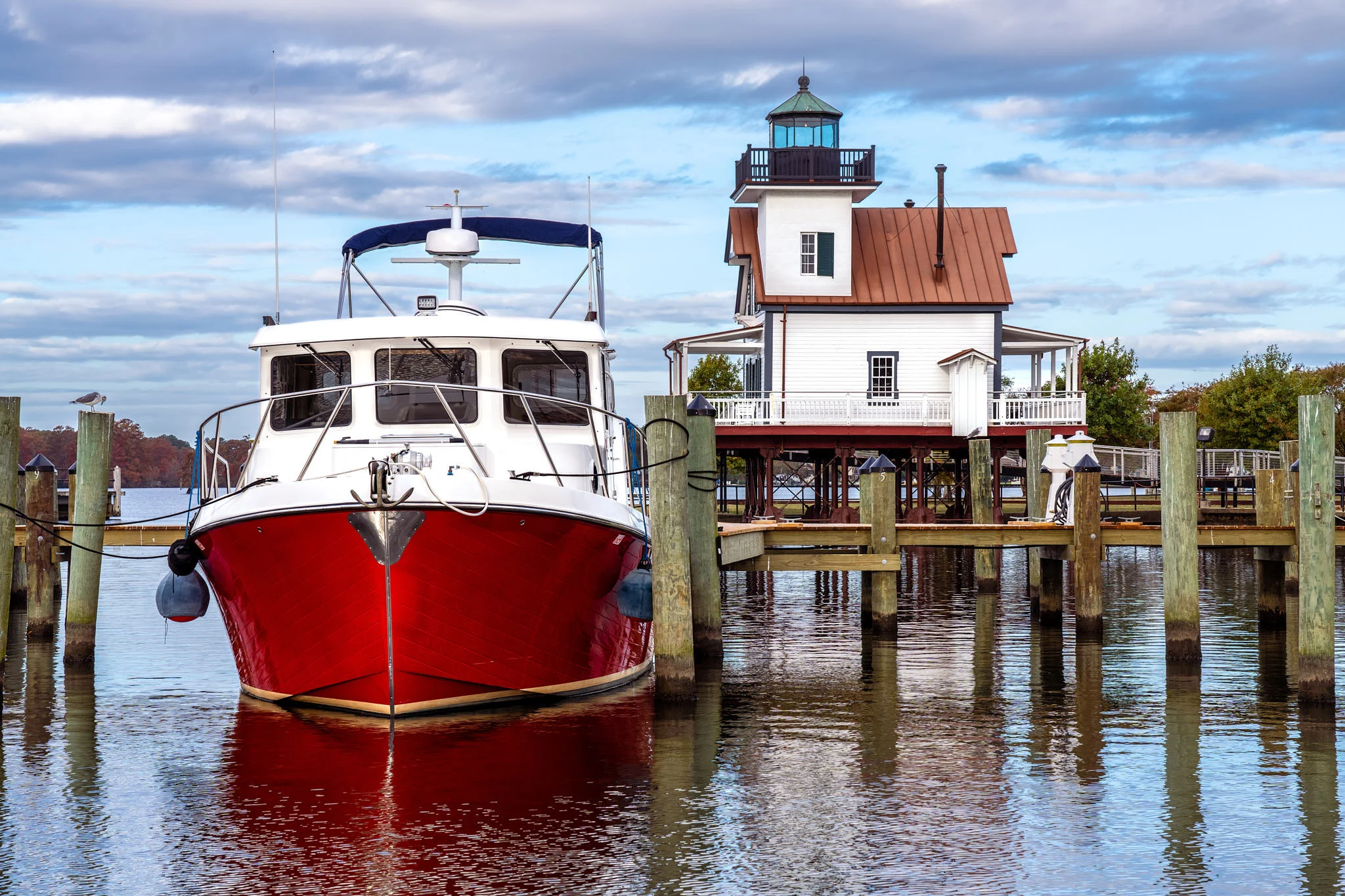
New Edenton Boat Builder Opens: What It Means for Buyers
The Whiskey Project opened a 60,000 square foot boat plant in Edenton on Oct. 20. What 200 promised jobs mean for Chowan County buyers and resale.
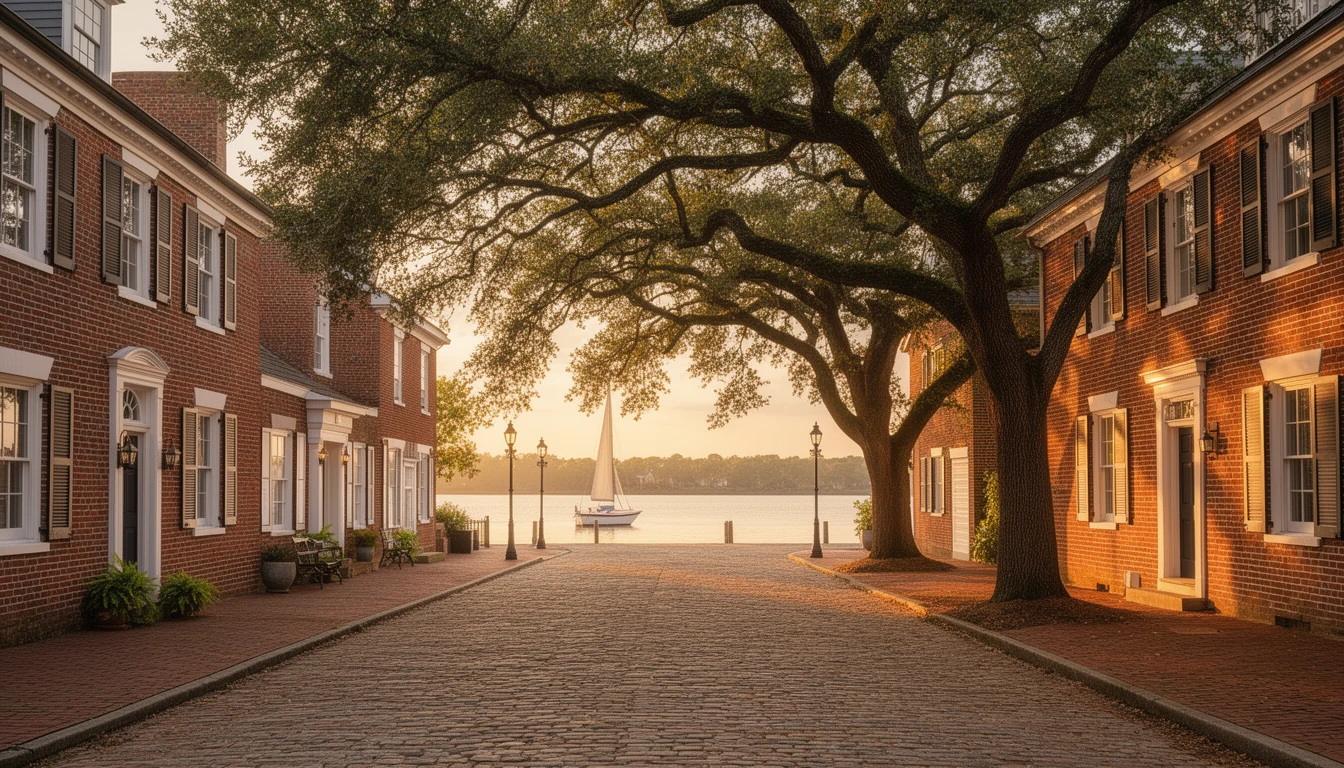
Retirees Shortlist Edenton: 8 Reasons, 2 Trade-Offs
Eight reasons retirees keep shortlisting Edenton, NC, and the two trade-offs that send some back. Taxes, walkability, water, and the honest math.
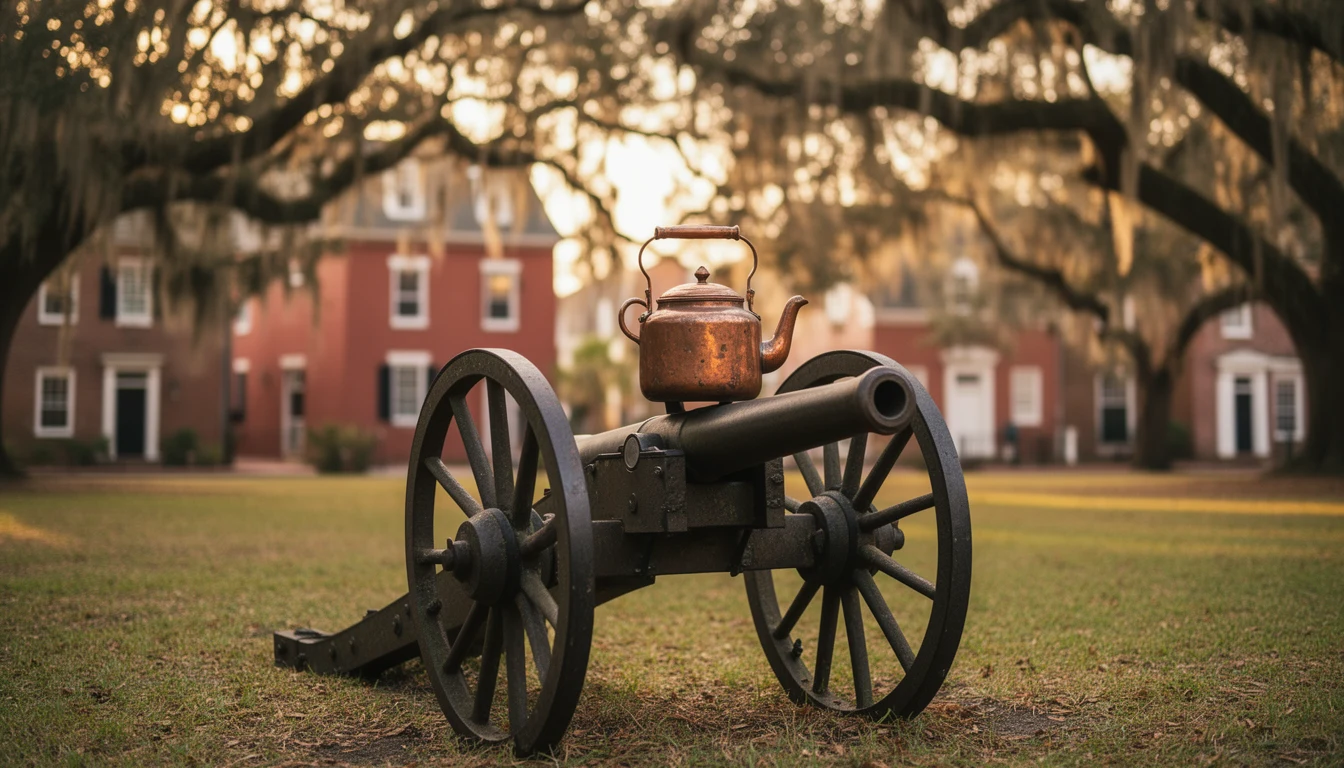
6 Edenton Tea Party Facts Most New Residents Get Wrong
No tea hit the water in 1774. The Edenton Tea Party was a paper protest, and six facts newcomers get wrong about it.